Hi, I'm Dina.
I uncover how people decide, and why.
UX Researcher with a background in psychology, neuroscience & AI. I study complex systems and the people navigating them.

Selected Work
Each project started with a gap — something assumed, overlooked, or unasked. Here's what I found.

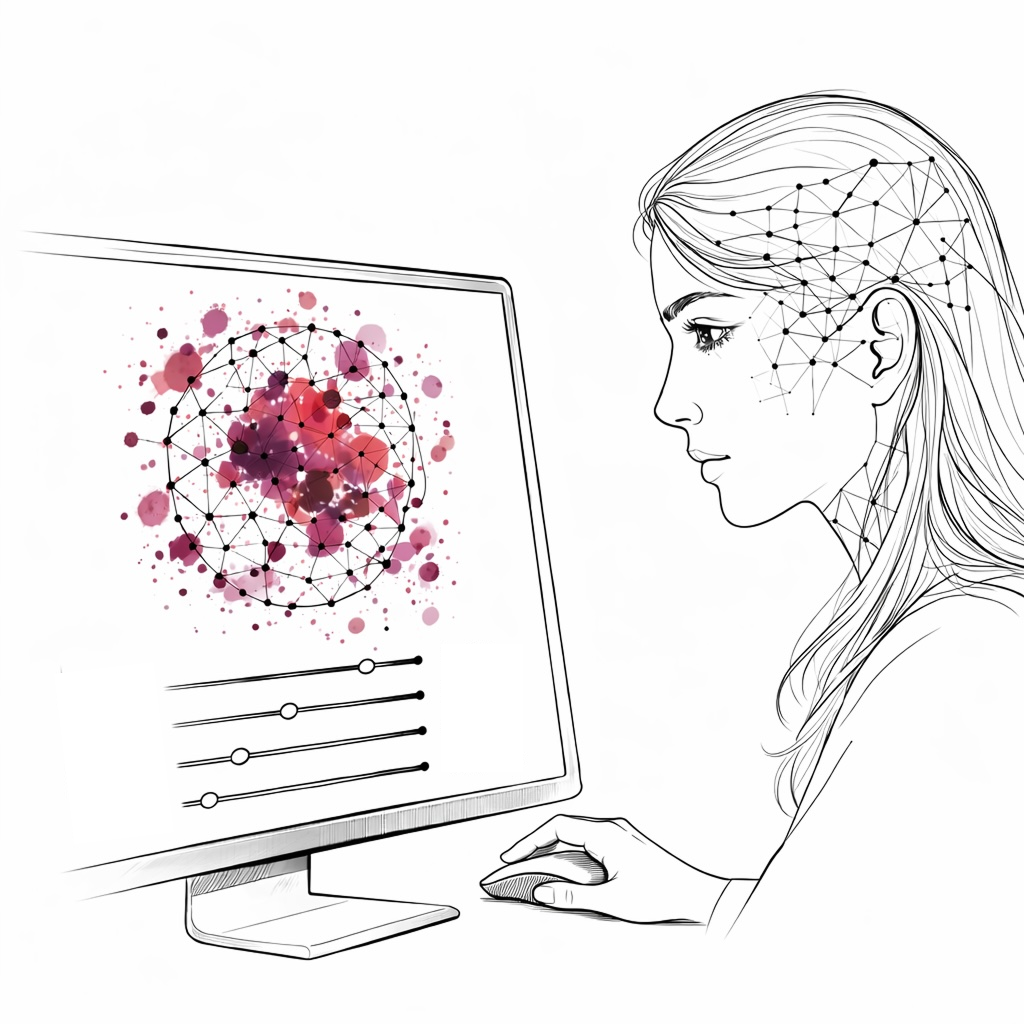

I find what others research around.
Philosophy
Most research answers the question on the brief. I try to find the better question first. I map what's known, what's assumed, and what's been overlooked — then design research that surfaces the thing nobody thought to look for.
Background
My work draws from psychology, neuroscience, and AI — a combination that lets me hold the human and the system in the same frame. I'm drawn to high-stakes, complex domains where the cost of a wrong assumption isn't a missed metric, but a real consequence for real people.
I think in chains: the right method leads to rich insight, which ripples through the product and makes it stronger.
Areas of Focus
Decision Systems
Safety-Critical UX
AI Interaction Design
Research Strategy
Systems Modeling
Product Leadership
A Little About My Process
I start by getting close to the problem — talking to stakeholders, reviewing existing data, and identifying what we actually need to learn versus what we think we already know. From there I build a research plan that balances speed with rigor, choosing methods based on the question rather than habit.
Ambiguity is usually a signal that the right problem has not been framed yet. I treat early-stage work as hypothesis generation — running quick exploratory research to surface assumptions, map the system, and find the lever points worth investigating further before committing to a solution direction.
It depends on the question. For understanding mental models and decision-making, I lean on semi-structured interviews and think-alouds. For evaluating design decisions, usability testing and heuristic analysis. For broader patterns, I combine surveys with behavioral data. I am mixed-methods by default — qual tells you the why, quant tells you the how much.
Research only has impact if the people building the product believe in it. I involve designers, PMs, and engineers early — in research planning, as observers during sessions, and in synthesis. When the team has seen the user themselves, the findings land differently.
A report nobody reads is not good research. Good output is whatever format makes the insight impossible to ignore — a one-pager, a decision framework, a short video clip of a user session. The goal is action, not documentation.